Recreating a 70-year love story frame by frame
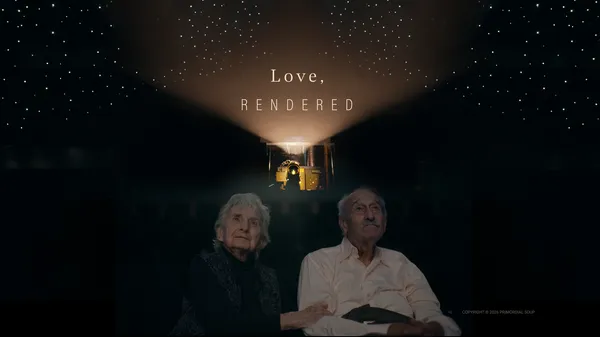
The film "Love, Rendered" is a new documentary short that explores memory loss and the power of storytelling, and showcases how technology can help rekindle fading memories. It follows Burt and Ethelle Shatz, a couple married for over 70 years, as they navigate Burt's cognitive decline. Among his fading memories is one of their most precious: the day they met at a student co-op in Cleveland. Because that day was never photographed or filmed, it existed only in their minds.
The creative team was drawn to the resilience of memory and to reminiscence therapy, the clinical practice of using sensory cues like songs, family stories, and old photographs to stimulate memories, spark conversations, and rekindle emotional connections. Director Liz Garbus had seen fMRI scans light up when patients in minimally conscious states heard familiar voices or saw images of loved ones while making her documentary "Coma," and Darren Aronofsky had encountered footage of a former ballerina with Alzheimer's who instinctively danced "Swan Lake" choreography from her wheelchair. The project asked what happens when a memory isn't attached to any such cue.
To recreate Burt and Ethelle's unrecorded past, the filmmakers partnered with Google DeepMind. Ethelle sat alongside the team as an active co-creator, correcting details like the curve of a staircase or the shape of a shoe heel. Google DeepMind engineer Michael Chang, who served as the film's technical lead, describes memory loss as personal: his grandfather suffered a stroke and memory loss before passing, and on their last visit mistook him for a college student about to graduate. When the project began, Chang asked his father for old family photos, tested the team's image restoration on pictures from when his parents met, and used their video models to animate them — an experience he says drove home how these tools could help keep what matters most from slipping away.
"Love, Rendered" was directed by Academy Award–nominated filmmaker Liz Garbus, who produced it alongside Dan Cogan and Darren Aronofsky. It was created in collaboration between Google DeepMind and Primordial Soup, Aronofsky's creative venture, with the teams leveraging emerging AI models as both an art medium and a toolkit.