How to Write with an LLM
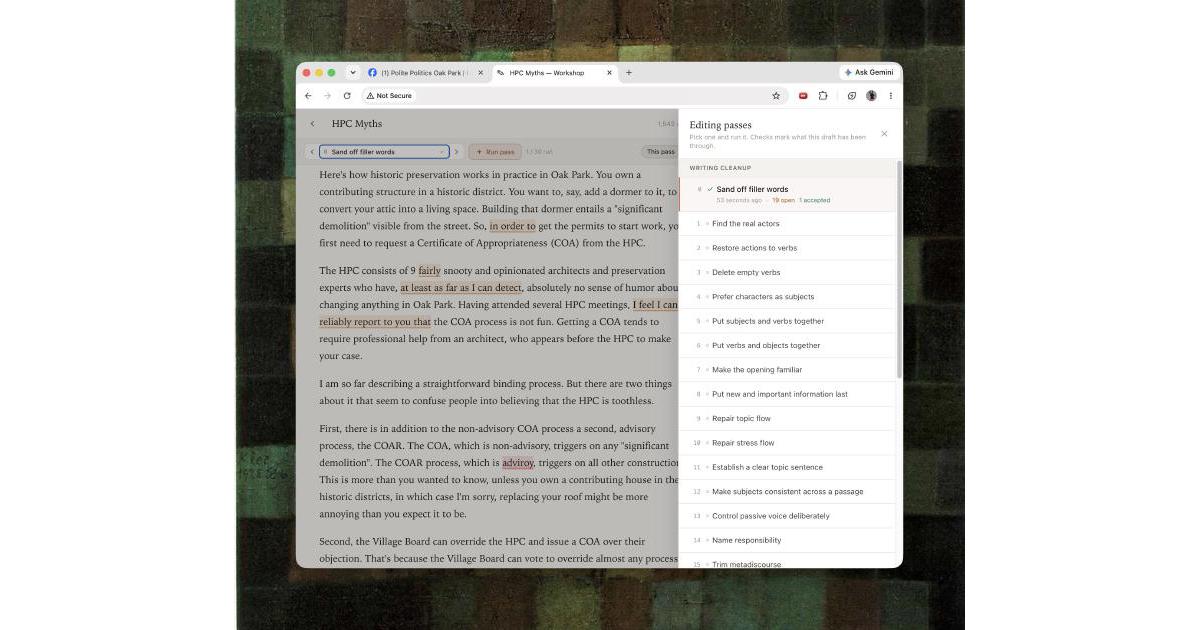
The piece opens by arguing that LLMs can streamline and improve writing without pasteurizing it or jacking it with corn syrup. The author acknowledges how awkward it is to write about writing—it can seem like a brag, and critics online may decide you are bad at it—but says the advice is important, hard to argue with, and straightforward enough to overcome that discomfort.
The core warning is that readers can detect LLM wording in the parts per trillion. No matter how much effort goes into scuffing up or humanizing an LLM paragraph, much of the audience will register it not as writing but as output. The bad news is therefore that you have to write for yourself. LLMs remain useful, but they should be used like a copyeditor, not a ghostwriter: first write your piece, then feed it to a good model to find flaws.
Before explaining that workflow, the author sets two rules to ward off LLM-creep that pushes writing into the uncanny valley between expression and output and costs reader attention. Rule One: do not use a single word an LLM suggests. Frontier models are supernaturally good at choosing pleasing turns of phrase—it is basically their whole thing—but they are wedged in a mode where everything reads like a magazine headline. Headlines are fine; an article made of dozens of them is not. The rule acts as intellectual personal protective equipment: any specific turn of phrase from an LLM is disqualified, even if you like it and even if you are sure it is better than what you had. The author says you should be strict because you will not reliably spot all the ways frontier models turn writing into Velveeta.
Rule Two: avoid encouragement. LLMs infect writing through subtler influence campaigns that are less obviously damaging but still make the writing worse—so if that is the outcome, there is little point enlisting them. Hand an LLM any piece of writing and it tends to reply that it is gold. That is not what you need: in a first draft, most paragraphs may be bad, the topic flow may be incoherent, and there may be at least 750 unnecessary words. The model instead encourages your overall structure, then your paragraphs and transitions, then your word choices, metaphors, and pop culture references. The author warns that these are all bad and that you should not listen. The excerpt ends mid-sentence at that warning.