Extensible Software in the age of LLMs
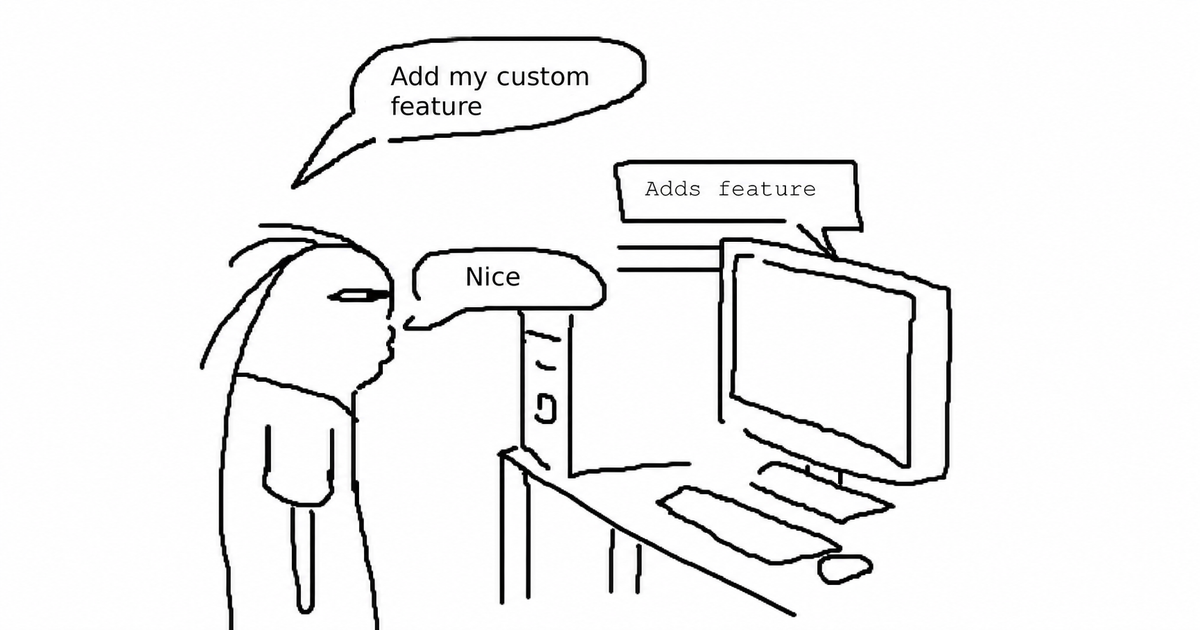
The essay starts from the observation that most web software is static, built by developers with limited time who focus on features serving the largest user group. That leaves a long tail of unmet, individualized needs, and piling on features for small audiences makes the interface worse for everyone. LLM-assisted coding, however, has made it genuinely easy to build 'Software for One' — personal apps custom-fit to a single person's workflow, which Pete Koomen at Y Combinator calls 'Small Software'.
The author notes that while agents make building such tools easy, deploying, securing, and sharing them remains far more complicated than creating them. A cloud built specifically for small software could make bespoke tools as easy to share as a Google Doc. The essay offers Pi as an example of 'LLM-native software': a battle-tested core that is endlessly extensible just by asking, with users able to share customizations. This 'self-extension' pattern, enabled by users who can now 'speak code into existence,' is something most existing software cannot leverage.
Existing pluggable software (AI agents, IDEs, video game mods, Blender add-ons, CAD extensions) is mostly local and professional with high barriers to entry. The author argues the web — the most successful software distribution system — should not be left behind. Their hypothesis is a new opportunity for extensible software on the web: LLMs radically lower the cost of authoring extensions, and modern sandbox primitives lower deployment cost while providing security boundaries. Builders can create a solid, accountable core and let users safely extend it in many directions.
Concluding with a disclosure that they work at Cloudflare, the author notes their thinking was shaped by Kenton Varda's writing and suggests that Dynamic Workers are a particularly good fit for this model.