Yes, Claude can do nine loops
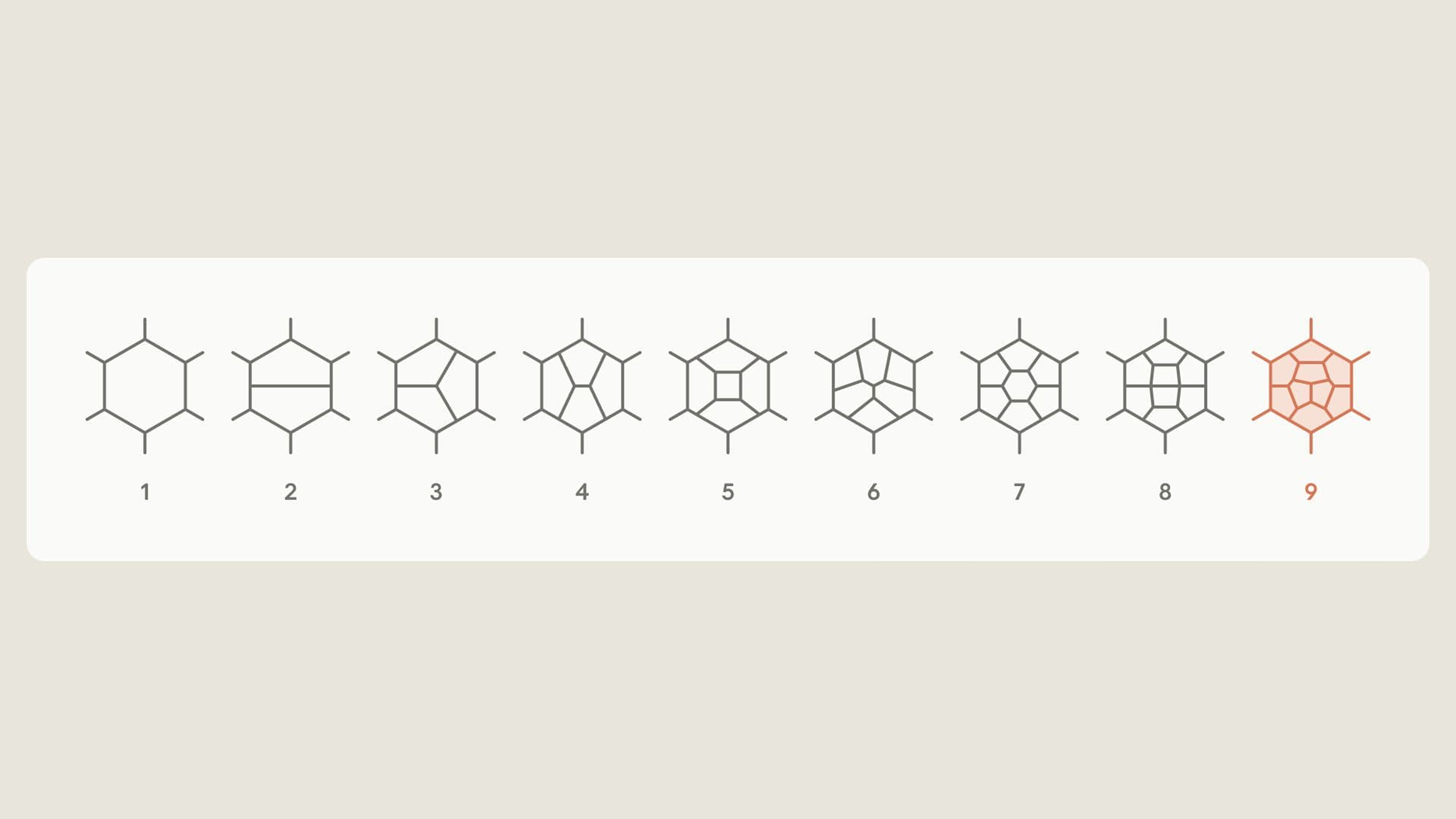
Matt von Hippel introduces himself as a former theoretical physicist turned science writer who blogs weekly at 4gravitons.com about physics and the people who do it. He says blogging about physics increasingly means blogging about AI, but he is not an AI expert and mostly has to trust experts — who disagree sharply. Some well-informed people are confident AI is a few years from superintelligence with terrifying capabilities; others are equally confident that LLM-based AI is near a ceiling and will not even do impressive physics work.
Reluctant to make his own prediction, von Hippel wanted to see an LLM make progress on something familiar and known to be hard, and specifically on something he expected to be computationally hard rather than merely dependent on mysterious new ideas. Math progress comes from ideas whose difficulty is hard to judge in advance, while computation felt more solid. He wanted to see an LLM tackle a challenge that seemed out of reach not because researchers lacked the in-principle method, but because doing it would likely require more computers and time than researchers reasonably had access to. He wanted to know whether a smarter artificial researcher could use the same computers and solve it anyway.
So he issued a challenge: if AI companies want to impress or scare people like him, they should tackle his old field. They should show that an AI can take the kinds of computer resources an academic has access to and solve one of the scattering amplitudes field’s big outstanding problems, demonstrating that a computational limit everyone expected to be a problem does not actually matter. The specific targets were N=8 supergravity to seven loops, or N=4 super Yang-Mills to nine loops. In short: can AI solve a frontier problem in his former subfield of theoretical particle physics on a budget?
The excerpt notes that it is not often one issues a challenge and sees it beaten a month later, but these are unusual times. The title states “Yes, Claude can do nine loops,” indicating Claude met the nine-loop target — N=4 super Yang-Mills to nine loops — only a month after the challenge was issued. The excerpt then begins to describe amplitudeology as a branch of theoretical particle physics concerned with how particle physicists predict new particles, but it cuts off at that point.